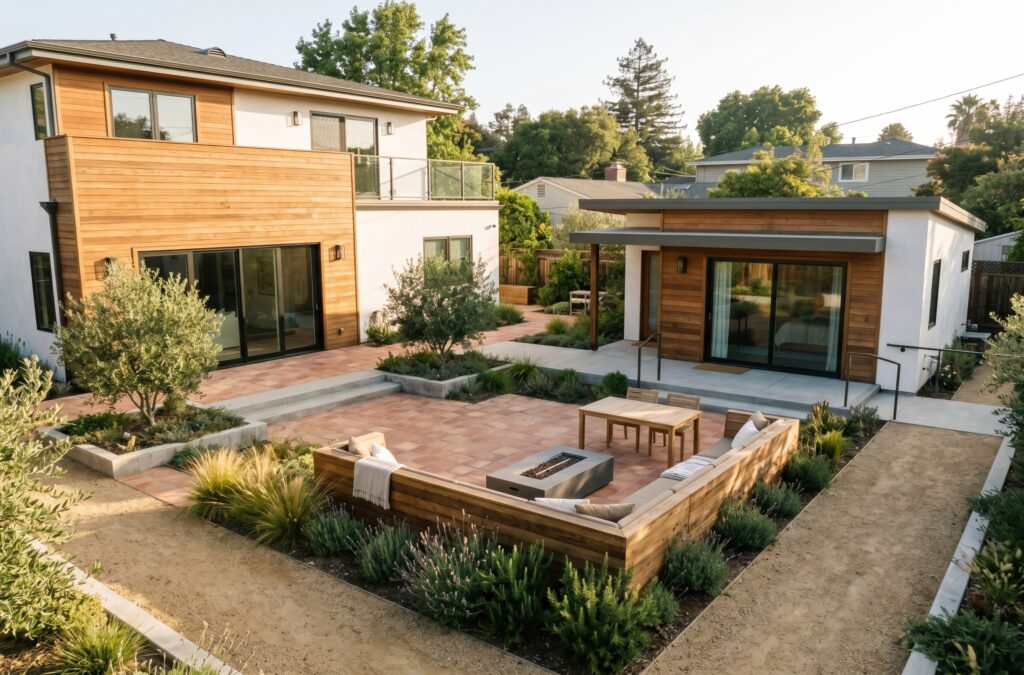
An annexe gives you something most homes eventually run out of: room to grow without having to move. Whether it is a self-contained space for family, a dedicated home office, a guest suite, or simply a place to retreat to at the end of the day, adding an annexe opens up possibilities that the main house on its own cannot offer.
Here is what makes it worth considering.
A space for family to stay close
Multi-generational living is becoming more popular across the UK, and an annexe is one of the most comfortable ways to make it work. An adult child saving for their own home gets privacy and independence while staying close by. A parent or grandparent who would appreciate being nearby has their own front door, their own kitchen, and their own routine, while you are just a few steps away.
What makes an annexe work so well for families is the balance it creates. Everyone has their own space, their own rhythm, and their own sense of home, while still being part of the same household. It is closeness with breathing room.
A home office that actually works
Working from home has become a permanent part of life for many people, and the kitchen table was only ever a temporary solution. An annexe gives you a proper, separate workspace: a place where you can close the door at the end of the day and leave work behind, rather than living in your office.
If more than one person in the household works from home, the value of a separate building increases. Fewer competing video calls, fewer interruptions, and a much clearer line between work hours and home hours. That boundary is worth more than most people realise until they have it.
A guest suite your visitors will love
A spare bedroom does the job, but a self-contained annexe takes hosting to another level. Guests get their own space, their own bathroom, and somewhere to make a cup of tea without worrying about waking the household. You get to enjoy having people to stay without rearranging your entire home around them.
If you live in an area that attracts visitors, whether it is the coast, the countryside, or a popular city, a well-finished guest annexe becomes something friends and family genuinely look forward to staying in. It turns a visit into something that feels more like a holiday.
A creative space of your own
One of the most enjoyable things about an annexe is the freedom to design it exactly as you like. Because it sits apart from the main house, you can try ideas that might feel too bold for your living room: a colour scheme you have always loved, a particular style of furniture, a layout that suits exactly how you want to use the space.
An art studio, a music room, a yoga space, a reading room with floor-to-ceiling shelves. An annexe can be whatever you want it to be, and that kind of creative freedom in your own garden is something to enjoy.
It can add real value to your property
A well-built, self-contained annexe can add meaningful value to your home when it comes time to sell. Buyers increasingly look for homes with flexible living spaces, and an annexe gives them exactly that: a property that can adapt to different stages of life, different family setups, and different ways of working.
Even if selling is years away, the investment tends to pay for itself through the everyday benefits of having additional, flexible space. A room in the house serves one purpose. An annexe can serve several, and that kind of versatility is worth having whether you stay for five years or fifty.
What to think about before you build
Before you start drawing plans, there are a few practical things worth thinking about. Many annexes can be built under permitted development rights, which means you may not need full planning permission, though there are conditions around size, height, and position. If you are in a conservation area or your property is listed, the rules are different, so it is always worth checking with your local planning authority before you commit.
Think about what services the annexe will need: water, electricity, drainage, and heating all need connecting, and the budget varies depending on how far the annexe sits from the main house. A good architect or builder who has worked on residential annexes before will be able to walk you through the options and help you plan the investment.
Already looking for a home with an annexe?
If building one is more than you want to take on right now, buying a property that already has an annexe is well worth exploring. Let your estate agent know what you are looking for and how you plan to use the space. Whether it is for family, for work, or simply for the flexibility of having it there, an agent with local knowledge can help you find homes that already offer what you need.
Frequently asked questions
Do I need planning permission to build an annexe?
Many annexes can be built under permitted development rights, which means full planning permission is not always required. However, there are conditions around size, height, and how close the annexe sits to your boundaries. If your property is listed or in a conservation area, the rules are stricter, so it is always worth checking with your local planning authority before you start.
Does an annexe add value to a property?
Yes. A well-built, self-contained annexe can add meaningful value to your home. Buyers are increasingly drawn to properties with flexible living spaces, and an annexe offers exactly that. The amount of value it adds depends on the quality of the build, the size, and the location.
What can I use a garden annexe for?
An annexe can serve almost any purpose: a home office, a guest suite, a space for an older or younger family member, an art studio, a gym, a music room, or simply somewhere to retreat to. The key is designing it around how you actually plan to use it.
How much does it cost to build an annexe?
Costs vary depending on the size, specification, and how far the annexe sits from the main house. Connecting services like water, electricity, and drainage is a significant part of the budget. A builder or architect who has worked on residential annexes before will be able to give you a realistic idea of the investment.
Can I live in an annexe full time?
An annexe can be used as a full-time home, and many families use them for exactly that. If it is self-contained with its own kitchen, bathroom, and entrance, it can work as an independent living space while still being part of the same property.